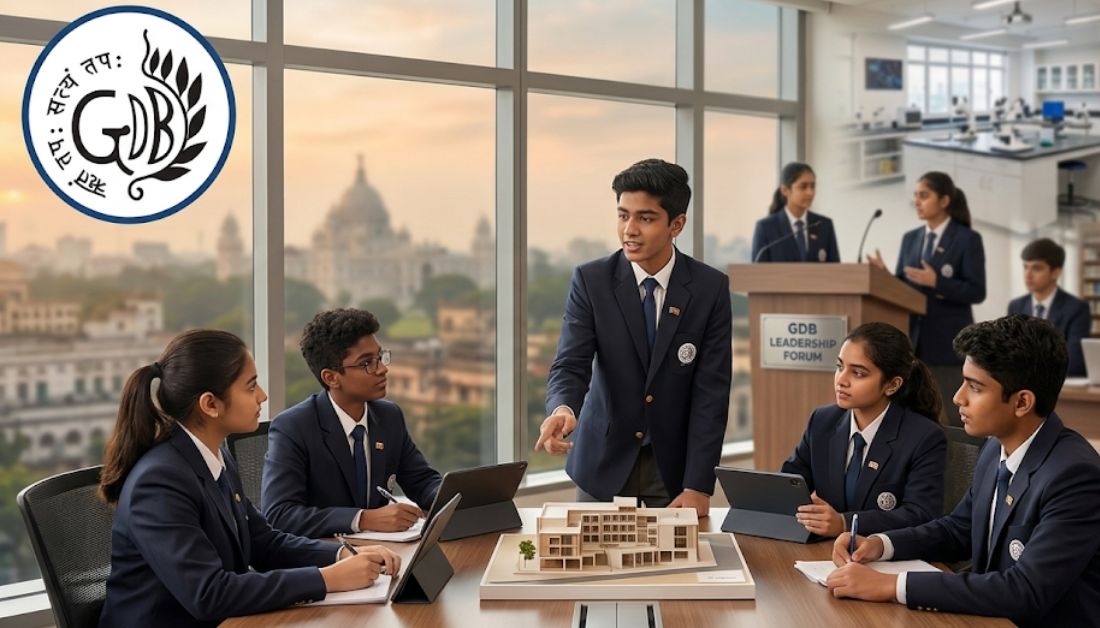
In the evolving landscape of 21st-century education, schools are no longer measured solely by academic scores or board results. The true benchmark of an exceptional institution lies in its ability to nurture confident thinkers, responsible leaders, and visionary decision-makers. Leadership training in schools has therefore emerged as an essential pillar of modern education, shaping students not only for successful careers but for meaningful lives.
At G.D. Birla Centre for Education, leadership is not treated as an extracurricular luxury; it is seamlessly woven into the institution’s educational philosophy. Established in 1973 under the prestigious Ashok Hall Group of Schools, this school in Kolkata has consistently upheld a legacy of academic excellence, values-based education, and holistic personality development.
Why Leadership Education Matters More Than Ever
Today’s world demands far more than textbook intelligence. Future leaders must possess emotional intelligence, adaptability, communication skills, ethical awareness, and the ability to make informed decisions under pressure. In such a context, schools play a defining role in cultivating these capabilities during a child’s formative years.
Leadership training in schools helps students:
- Develop independent thinking and problem-solving abilities
- Build confidence in communication and public interaction
- Learn accountability, collaboration, and resilience
- Strengthen emotional and social intelligence
- Become proactive rather than reactive decision-makers
For teachers and educators, leadership-focused learning also creates more engaged classrooms where students actively participate, take initiative, and develop a genuine sense of responsibility.
A School Environment That Inspires Leadership
What makes the G.D. Birla Centre for Education particularly distinctive is its deeply student-centric educational environment. The institution believes that education must go beyond examinations and focus equally on behavioural growth, cultural grounding, and intellectual empowerment. The school’s “ABC approach”, including Academics, Behavioural Development, and Cultural Values, reflects this philosophy with remarkable clarity.
Rather than encouraging rote learning, the institution nurtures curiosity, creativity, and independent thought. Students are guided to think critically, collaborate effectively, and approach challenges with confidence; qualities that define impactful leadership. This balanced approach is particularly meaningful for teachers, as it transforms classrooms into spaces of dialogue, innovation, and active learning rather than passive instruction.
Leadership through Holistic Learning
One of the strongest foundations of leadership education is holistic development, and G.D. Birla Centre for Education has consistently championed this philosophy. The school integrates academics with co-curricular enrichment to ensure that every learner evolves intellectually, emotionally, socially, and creatively.
From debates and public speaking activities to STEM programs, arts, music, sports, and collaborative projects, students gain experiences that sharpen both communication and decision-making skills.
Such opportunities can allow students to:
- Learn teamwork and delegation
- Handle responsibilities independently
- Manage time and pressure efficiently
- Develop strategic and analytical thinking
For educators, these activities become valuable extensions of classroom teaching, helping students apply theoretical learning to real-world situations.
Modern Infrastructure Supporting Future-Ready Leaders
Leadership in today’s world is closely linked with technological adaptability and innovative thinking. Recognising this shift, G.D. Birla Centre for Education has created a future-ready learning ecosystem supported by modern infrastructure and advanced educational facilities.
The institution’s smart classrooms, laboratories, libraries, and interactive learning spaces create an engaging educational experience where students can become active participants in learning. Technology-enabled teaching methodologies further help students strengthen research skills, digital literacy, and collaborative learning abilities.
The school’s emphasis on critical thinking and value-based education ensures that students are prepared not just for examinations but for leadership roles in a globally competitive environment.
The Role of Teachers in Leadership Development
No leadership program can succeed without inspiring educators. At G.D. Birla Centre for Education, teachers are not merely instructors; they are mentors who continuously “learn, unlearn, and relearn” to keep pace with evolving educational practices.
This progressive teaching culture empowers educators to:
- Encourage classroom discussions and analytical thinking
- Foster emotional resilience among students
- Identify individual strengths and nurture leadership potential
- Blend traditional values with contemporary teaching methodologies
Such an environment allows students to feel heard, valued, and motivated; essential factors in developing self-confidence and leadership qualities.
The Final Words
Leadership is not developed overnight, nor is it confined to corporate boardrooms later in life. It begins in classrooms, on playgrounds, in debates, on projects, and in everyday school experiences. Institutions that understand this truth are shaping the future far beyond academics. With its rich legacy, forward-thinking pedagogy, holistic learning culture, and unwavering commitment to student empowerment, G.D. Birla Centre for Education continues to set a remarkable benchmark in leadership-focused education.
If you aspire to provide your child with an education that goes far beyond textbooks and truly prepares them to lead with confidence, intelligence, and integrity, the GD Birla Centre for Education is the ideal destination. So, don’t wait for leadership to happen in the future; nurture it from the very first classroom experience with the Top ICSE High Schools in Kolkata, GD Birla Centre for Education.
Click Here: Map