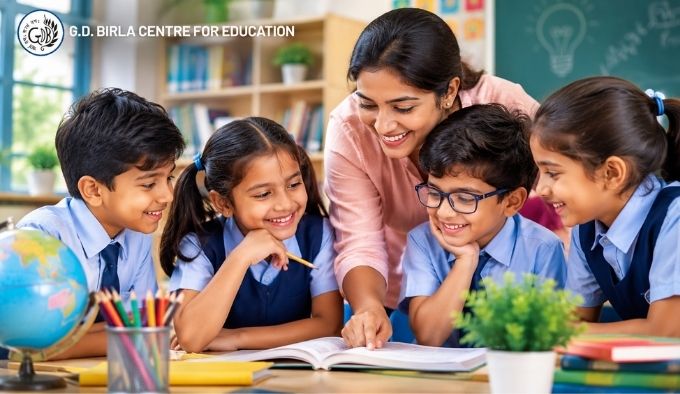
A classroom may bring children together, but their learning journeys are never quite the same. Each child develops at a different pace, responds to different experiences, and brings a distinct mix of curiosity, confidence, interests, and abilities to the learning process. Therefore, understanding these differences can help parents move beyond comparison and focus on meaningful, individual growth.
The importance of nurturing children during their formative years is well established. According to UNICEF India, more than 43% of children under five are at risk of not fulfilling their full developmental potential, underlining the value of responsive care, stimulation, and quality early learning experiences.
This blog explains why every child learns differently. We will also discuss how parents can support individual learning needs while choosing the best co-ed schools in Kolkata that encourage curiosity, confidence, and holistic development.
How Parents Can Create a Learning Approach That Fits Their Child
Learning is shaped by several factors, including a child’s developmental stage, prior experiences, interests, confidence, attention, language skills, and environment. Some children grasp ideas quickly through discussion, while others need time to observe, practise, and connect new information with what they already know.
Importantly, parents should avoid putting children into rigid labels such as “visual learner” or “slow learner.” Children can use different approaches depending on the subject and situation. A better goal is to understand what helps a particular child engage, understand, and retain knowledge. Here’s how parents can create a learning approach that fits their child.
Observe the Child Beyond Marks
The first meaningful step parents can take is to look beyond marks and understand how their child learns, thinks, and responds. Grades provide useful information, but they do not tell the whole story.
Therefore, parents should notice how their child approaches a challenge, asks questions, solves problems, and responds to mistakes. A child who struggles with written work may demonstrate excellent understanding during a conversation or activity. Such observations can help parents identify strengths that conventional assessments may overlook.
Encourage Curiosity Instead of Comparison
Comparing siblings, classmates, or cousins can make learning feel like a competition instead of an opportunity to grow. Therefore, parents should encourage children to ask questions, experiment, and make mistakes without fear.
Try to praise effort, persistence, and thoughtful problem-solving instead of focusing only on perfect results. Over time, this approach can help children develop confidence and a stronger willingness to learn.
Create Different Ways to Learn at Home
Creating different ways to learn at home is another major responsibility of parents. Learning does not have to remain confined to textbooks. Reading stories, discussing current events, drawing diagrams, conducting simple experiments, solving puzzles, visiting museums, and using everyday situations to explain concepts can make learning more meaningful.
For example, parents can use cooking to introduce measurements or everyday shopping to explain basic mathematics. These experiences help children connect academic concepts with real life.
Choose a School That Values Individuality
The school environment plays an equally vital role in supporting different learners. G.D. Birla Centre for Education places individual attention at the heart of its child-oriented approach, with educators focusing on each student’s unique strengths and providing personalised mentorship.
Its academic framework also combines scholastic learning with co-scholastic enrichment while developing critical thinking, problem-solving, communication, and global awareness.
Look Beyond Traditional Classroom Learning
Children often discover their strongest interests outside conventional lessons. Sports, music, art, clubs, field trips, and other activities can encourage creativity, collaboration, confidence, and independent thinking.
At G.D. Birla Centre for Education, a broad range of extracurricular programmes, including sports, arts, and music, complements academic learning. The school also provides smart classrooms, laboratories, a library, and other modern facilities that support varied learning experiences.
Build a Strong Parent-School Partnership
Parents and teachers see different sides of a child. Therefore, regular communication helps both understand academic progress, interests, challenges, and changing needs more clearly.
When home and school work together, children receive consistent encouragement and guidance instead of conflicting expectations. This partnership can also help adults recognise changes in a child’s interests or learning needs early.
How G.D. Birla Centre for Education Supports Diverse Learners
A truly effective educational environment does not expect every child to follow an identical path. It provides structure while leaving room for individuality.
As one of the top ICSE schools in Kolkata, G.D. Birla Centre for Education combines academic learning with holistic development, individual attention, experienced faculty, and modern learning facilities. Its student-centric philosophy recognises that each learner has distinctive strengths and learning needs.
This approach reflects an important principle: education should not simply teach children what to learn; it should also help them discover how they learn best.
Final Thoughts
In summary, every child has a different learning rhythm, and that difference deserves understanding instead of judgement. When parents observe, encourage curiosity, avoid unhealthy comparisons, and choose an environment that values individual strengths, children gain the confidence to learn in meaningful ways.
At G.D. Birla Centre for Education, learning extends beyond academic achievement to include critical thinking, creativity, communication, physical development, and social-emotional growth. For parents seeking an educational environment that respects individuality while nurturing excellence, the school offers a thoughtful, student-centred approach to shaping confident and capable young learners.